Flood Defense
&
Mitigation Planning
City-Scale Flood Defense Planning
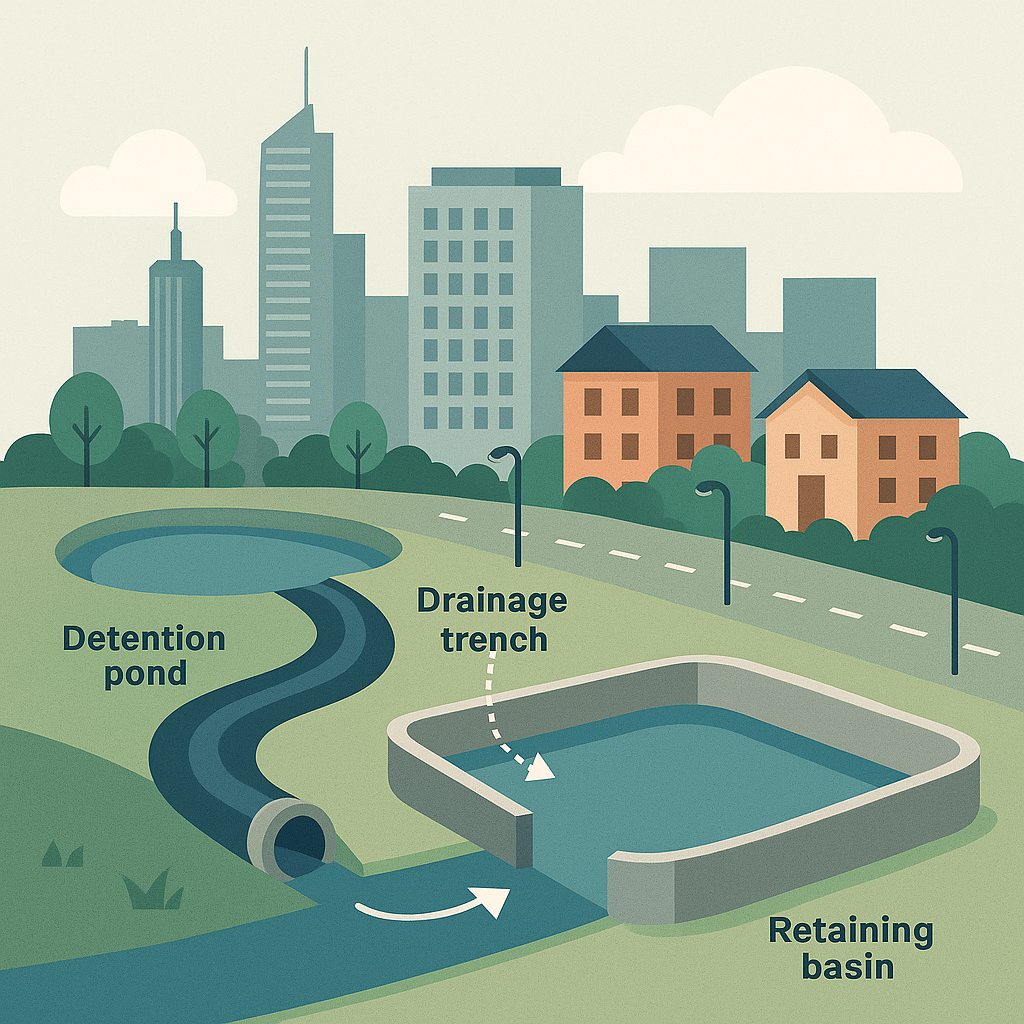
Our hydrological modeling reveals the dynamics of flood propagation across the urban landscape—highlighting high-risk zones, water flow directions, and accumulation hotspots. These insights allow us to design city-scale defense strategies, including drainage trench networks, flood retention basins, green infrastructure, and emergency flood routing systems. Whether we’re protecting dense city centers or suburban zones, our interventions are grounded in data, helping municipalities prioritize the most vulnerable areas and implement resilient infrastructure with cost-effective impact
Site-Specific Protection for New and Existing Structures
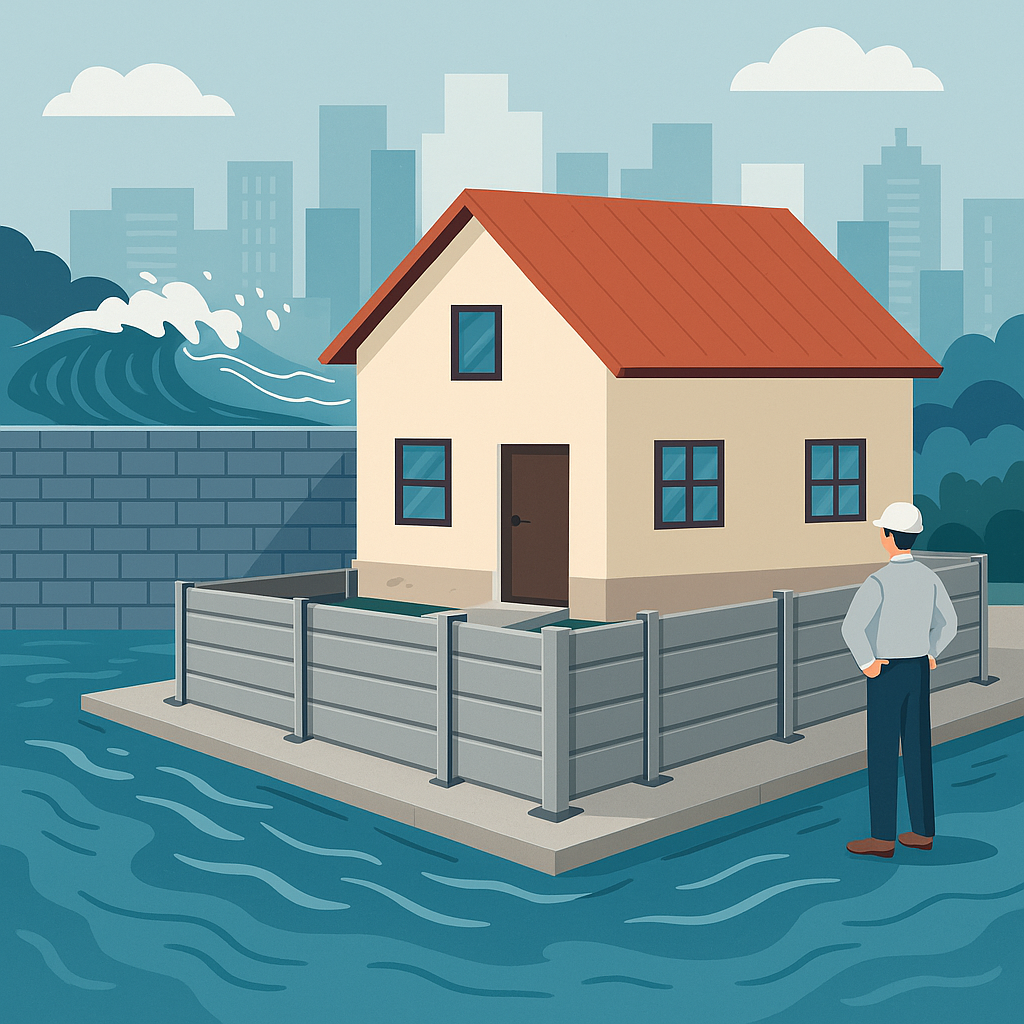
Using advanced 2D modeling outputs, we determine the potential flood depth, arrival time, and water source for individual buildings and properties. This enables us to tailor defense strategies—such as elevation planning, barriers, backflow preventers, and sump systems—to both existing structures and planned developments. Our models serve as the foundation for designing technically sound, future-proof defenses, ensuring that critical assets are protected against the most likely flood scenarios
From Planning to Action
We don’t just model — we help build. Floodhound works with engineers, city planners, and property owners to translate modeling insights into real-world protections. From retrofitting existing structures to influencing new development codes and zoning, we support clients through implementation and regulatory alignment.
Engineered Flood Defense Solutions
Nature-Based & Passive Mitigation Measures
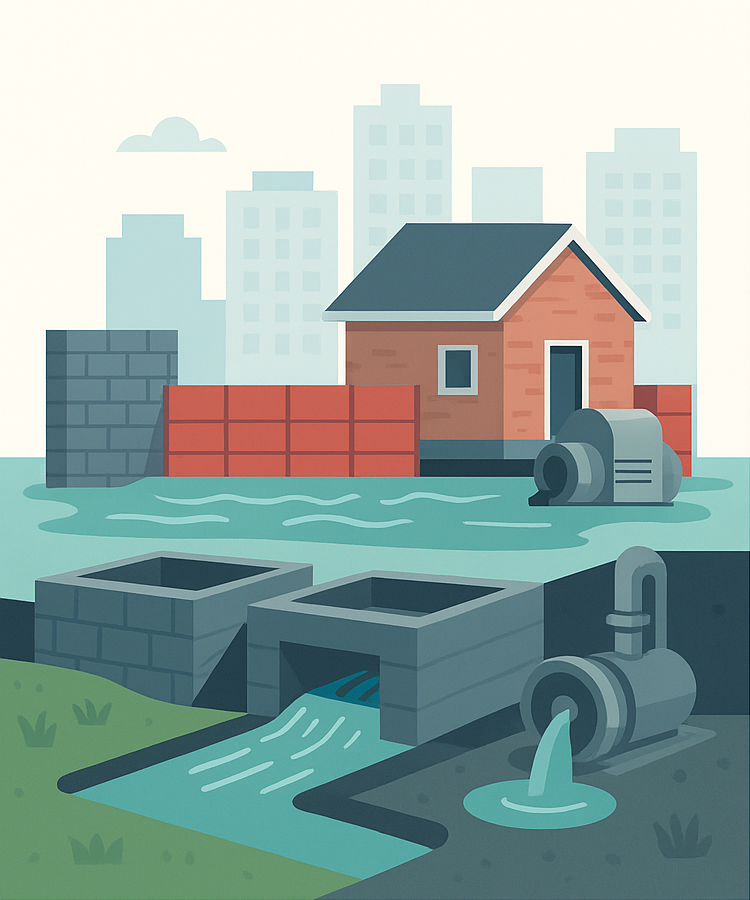
We design and plan structural defenses to physically block, divert, or retain floodwaters based on the predicted risk zones from our models.
These include:
Flood barriers and perimeter walls
Retention and detention basins
Underground stormwater tanks
Pumping stations and culverts
Backflow preventers and flood gates
Our goal is to implement technically robust, site-specific protections that withstand high-intensity rainfall events and safeguard critical assets.
Not all flood defenses need concrete and steel. We also integrate green infrastructure that mimics natural water absorption and slows runoff.
Common strategies include:
Permeable pavements
Green roofs and bioswales
Rain gardens and soakaways
Reforestation and buffer zones
Wetlands and water retention landscapes
These measures offer dual benefits: flood risk reduction and long-term environmental resilience, often with lower maintenance and broader community acceptance.